



Dear Friends, Family & Clients,
As we move deeper into this beautiful holiday season, I hope your tables are full, your homes feel warm, and your days carry a touch of that winter magic we all look forward to this time of year. There’s something special about gathering with the people who matter most – the clinking of dishes, the glow of candles, the simple joy of slowing down together.
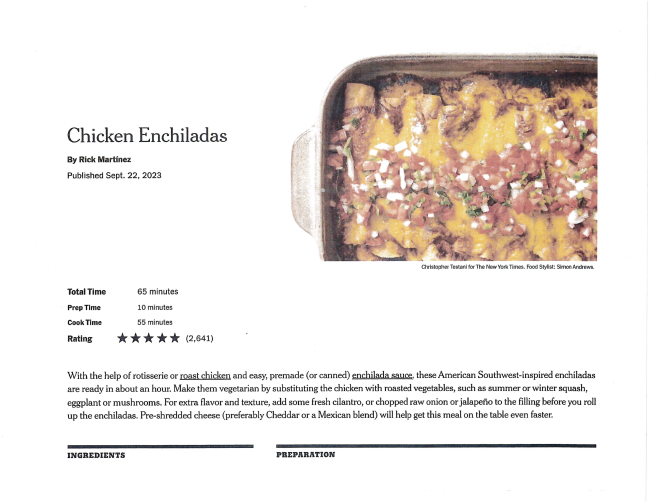
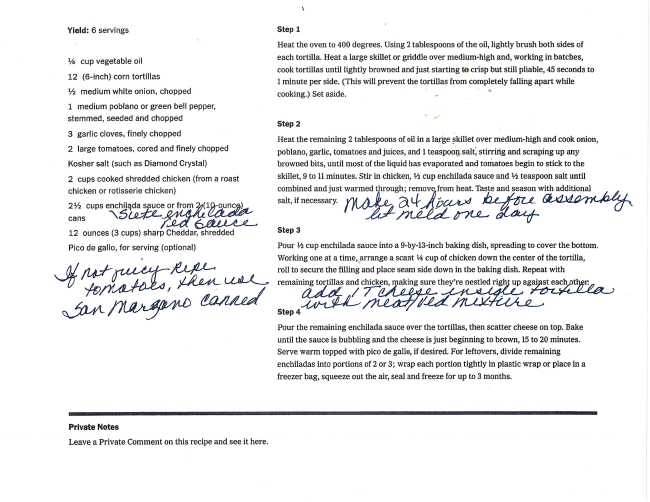
This month’s recipe leans right into that spirit. Instead of the usual holiday indulgence, it brings a little pause – and a little zing – to the table. It’s bright, flavorful, and perfect for warming up these crisp Montana days. I hope it finds a place in your winter rotation!
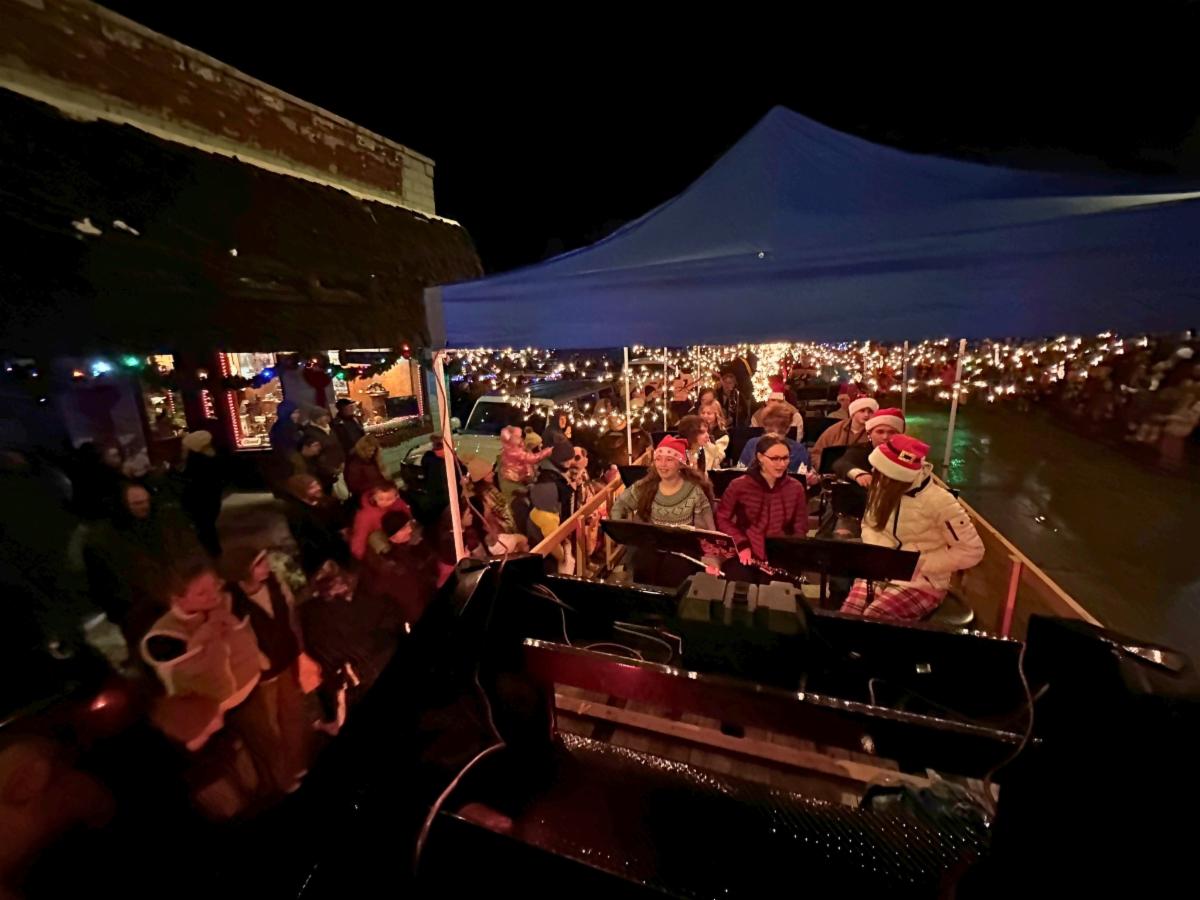
Speaking of warmth, I want to extend a heartfelt thank you to everyone who came out for the Parade of Lights and stopped by the office. What an incredible turnout! The energy, the laughter, the twinkling lights – it truly felt like the heart of our community beating in unison. We’ve included a fun round-up of photos shared by our community Friends -moments that capture the pure joy of the evening. And of course, a special shoutout to the hardworking elves who transformed our village into such a festive wonder. They outdid themselves this year.
With the winter days feeling a little dreary lately, I’ve continued leaning into that intentional coziness – extra blankets, soft lighting, warm soups, quiet mornings. It’s a reminder that even in the darker months, there is so much comfort to be found in slowing down and savoring what we love most about home.
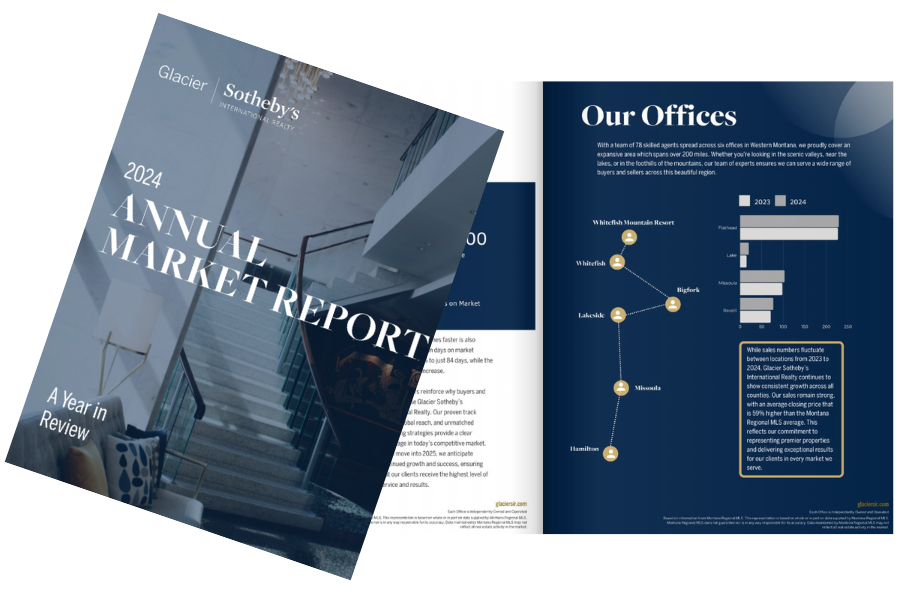
As we wrap up the year, the market is moving along at a steady pace. Interest rates are sitting around 6.3%, very similar to 2022, which has encouraged some buyers to re-engage while sellers ease into decisions at their own speed. There’s already early buzz about spring listings, and those willing to act now may find opportunities before things pick up. While some are still hoping for a major rate drop, history shows that lower rates often bring higher prices, so waiting doesn’t always lead to savings. Here in the Flathead, we’re seeing consistent activity across the valley, with most properties taking just over 100 days to close and out-of-state interest continuing to play a strong role.
Whether you’re preparing to list, thinking about buying, or simply staying informed – I’m here to support you every step. My deep understanding of the local market ensures a smooth, transparent, confidently guided real estate experience. You can count on professionalism, market expertise, and always a friendly touch!
If you or someone you know is wondering whether now is the right moment to make a move, let’s talk. I’m always happy to provide clarity, run numbers, or simply offer guidance as you consider your next steps.
Wishing you a cozy, joyful December and a bright, hopeful New Year ahead.
Warmly,
Denise ❄️
*Ceri in a food coma after the Thanksgiving feast.









































Hi friends, it’s me, Ceri, your resident holiday enchantress with short legs, big feelings, and a perfectly maintained coat. Odin’s here too – loudly, as usual – jingling his antlers like he’s auditioning to pull the sleigh. Boys…

So, it’s Christmas season, and let me tell you… our tails are working overtime. You hoomans think you’re busy with shopping and baking? Try coordinating tail-wagging schedules. Exhausting.
Okay, so apparently science says, (and so does Interesting Facts), dogs wag more to the right when we see someone we really like – which, fine, is true. Mine definitely swooshes right when I see my hooman. And when there’s cheese involved? Well… let’s just say my tail starts doing things I don’t recall signing off on.
Odin’s wag, by the way, could knock over a small Christmas tree. Ask me how I know.
Since we’re telling holiday truths… yes.
We do lick your hands more this time of year.
Why? Well, let’s look at the evidence.
You people spend December handling:
• cookies (the good kind, too – we can tell)
• hams that smell like they were sent from heaven
• gravy, which should honestly be a year-round event
• mysterious delicious things that fall on the floor (which legally become ours)
How could we not conduct a… thorough investigation?
And by “investigation,” I mean enthusiastic, determined, absolutely-necessary licking. It’s important work. Someone has to maintain quality control during the holidays.
But it’s also more than that – Licking is our way of saying:
“Hey. You’re my person. I adore you. Also, you currently smell like fudge, and I think I love fudge!”
So if you get a little extra slobbery affection this season, just know it’s part love… part culinary curiosity… and 100% festive dog logic.
__________________________________________
Here we are posing in our Christmas bandanas, because apparently it “spreads cheer” and “makes for adorable photos” …and because mom tried to put our antlers on, but Odin only wanted to eat them, so Christmas bandana’s it is! I tolerate it with grace. Odin tolerates it with real snacks.
But honestly? This season really does make us extra wiggly. We love the twinkly lights, the cozy vibes, the constant parade of visitors telling us we’re cute (accurate), and all the extra cuddles.
So from our little pack to yours – may your December be full of Holiday magic in the form of gentle tail wags, warm snuggles, and just the right amount of Christmas mischief.
Love,
Ceri (and Odin… loudly in the background)🎄
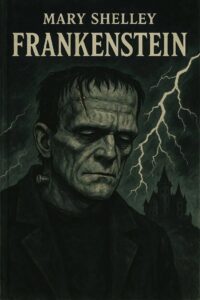 I recently re-read Frankenstein so that I could compare it to the Oscar nominated movie by Guillermo del Toro which is still on my list to watch, however I found this Analysis of Mary Shelley’s Frankenstein by Nasrullah Mambrol very fascinating and thought I’d share it with you this month:
The story of the events that led Mary Shelley to write her Frankenstein story is now almost as well known as the plot itself. The tale began to take shape in 1816 as a result of ghost-story-telling sessions held among Mary; her husband, British poet Percy Bysshe Shelley; and the self-exiled British poet George Gordon, Lord Byron, when the Shelleys lived in Switzerland.
After several days lacking inspiration, Shelley had her now famous “waking dream,” which she described in a preface to the novel’s third edition in 1831. In part, she wrote, “What terrified me will terrify others, and I need only describe the spectre which had haunted my midnight pillow.”
The work and its monster-hero became such a popular subject for film and stage, in serious, comedic, and parodic productions, that many acquaint themselves with Victor Frankenstein’s monster long before encountering it in Shelley’s book. Many first-time readers discover with a shock that the monster remains unnamed, with his creator bearing the Frankenstein moniker. A second, stronger shock may occur when readers realize that the monster, in great contrast to the bumbling, murderous, wild-eyed, grunting, crazy-stitched object of film, proves the most rational and also the most eloquent of any of the novel’s characters.
The basic plot of the novel remains powerful in its simplicity. Most of it appears in flashback, as a defeated, guilt-ridden Victor Frankenstein relates on his deathbed his tale of horror to a ship’s captain, Robert Walton, the first of the novel’s three narrators. He writes letters that relate his contact with Frankenstein, who hunted his human creation in the Arctic, where Walton and his crew found him. The letters advance the novel’s strongest theme, that of the conflict between science and poetry, or art.
While Frankenstein, once a young Swiss premedical student studying in Geneva, represents science, his beloved cousin Elizabeth Lavenza, who loves poetry, and best friend Henry Clerval, an aficionado of romance and chivalry whose surname describes his clarity of vision, represent art. As the story unfolds, readers learn that Frankenstein sought to create a composite human being from dead body parts. He reasons that those who have died might be restored if the secret to life can be found. Thus his focus is not at first on the generation of life but rather on regeneration.
In what becomes a madness to reach his goal, he isolates himself from Elizabeth and Henry, ignoring their pleas that he abandon the ungodly project that comes to obsess him. Dismayed by the creature, Frankenstein allows him to escape and eventually pursues him after the monster murders several members of Frankenstein’s family, including his beloved younger brother William, which leads to the execution of the Frankenstein family’s maid, an innocent unjustly accused of William’s murder. Frankenstein himself acts as the second narrator, his tale appearing within Walton’s own, while the monster’s third narration appears within Frankenstein’s own.
Shelley’s sophisticated structure emphasized the close connection of points of view and touched on many concerns of her era. At a time when the theory of evolution added to an ongoing debate over the nature and center of life, as well as to a prevailing argument regarding the value of science over religion, the monster’s existence personified the public’s greatest fears. Not only were his physical acts of violence frightening but also the cause of those acts, his rejection due to his “difference” by all humans he comes into contact with except for a blind man, leading astute readers to question in which being the true monstrous nature lurked.
The monster was not “born” hating others; his hate was taught him by people who refused to see beyond his external appearance to the brilliant warm nature existing just below its surface. While science might be expected to lack compassion, the same could not be said of religion, which should have prepared the public to be more accepting. That the monster possesses a quick intellect and a natural warmth and goodness that is corrupted only by his exposure to humans remains an indictment of shallow social values and a rigid class structure.
Timely political concerns surface as the monster hears lessons from Volney’s Ruins of Empire that relate to the correct division of property and the inherent conflict between the rich and the poor.
The ironic death of Frankenstein, indirectly caused by the life he created, remains part of a cautionary tale that bears just as strong a message against humans acting outside rational boundaries two centuries after Shelley wrote her novel. At its simplest, it is a rebuke of fathers who refuse to take responsibility for their children. At its most complicated, it represents all the ideals of Romanticism and the conflicts inherent to everyday life that continue to haunt the human condition.
Because Mary Shelley became one of the few women of her age to gain eventual fame from her publication, originally published anonymously, feminist critics and others who study women’s literature have continued to study Frankenstein with great interest. Although Shelley’s mother, Mary Wollstonecraft, wrote the most important feminist work prior to the 19th century, A Vindication of the Rights of Woman (1792), and strongly advocated women’s independence, Shelley did not create well-rounded female characters in her book.
Critics explain this by noting she shaped the women surrounding Victor Frankenstein realistically in order to demonstrate the lack of power for women of her age. They also see the monster himself as representative of women, with his marginalization and control by the book’s male protagonist. That he achieves a modicum of intellectual and physical independence, and must move beyond civic law to do so, may represent the fate of women who refused to conform to patriarchy’s strict control.
Shelley’s emphasis of freedom of the imagination through art, while strongly Romanticist in nature, also relates to one of the few types of freedom available to women, who often had to participate in the arts secretly. Like the monster that had no name, Mary Shelley herself remained officially nameless as the author of her classic for five years, until her name appeared in the 1823 second edition. Believing that Percy Bysshe Shelley had written the novel, Sir Walter Scott wrote of it in a review for Blackwood’s Edinburgh Magazine, 20 March/1 April, 1818 edition:
Upon the whole, the work impresses us with a high idea of the author’s original genius and happy power of expression. We shall be delighted to hear that he has aspired to the paullo majorica; and, in the meantime, congratulate our readers upon a novel which excites new reflections and untried sources of emotion. If Gray’s definition of Paradise, to lie on a couch, namely, and read new novels, come any thing near truth, no small praise is due to him, who, like the author of Frankenstein, has enlarged the sphere of that fascinating enjoyment.